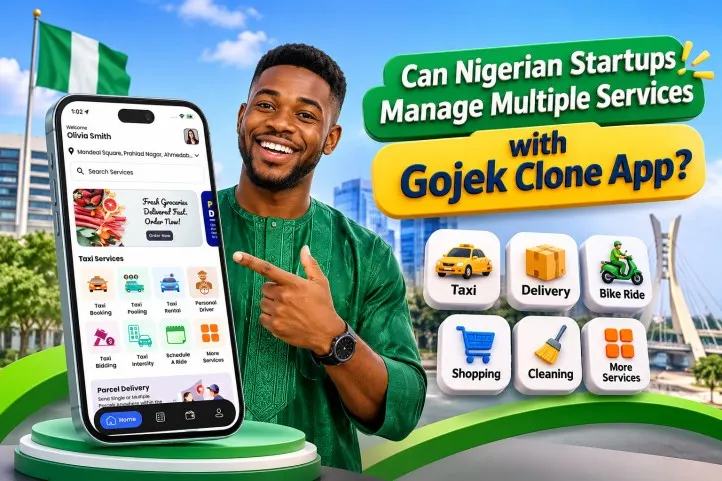
Nigerian businesses are increasingly using digital technology to reach consumers in a range of industries.
The Gojek Clone app in Nigeria is a platform that enables entrepreneurs to provide core services like transport, meal delivery, grocery purchasing, courier service, and home installations under one brand.
By doing so, businesses do not need numerous apps for various services but can now manage service providers, customer bookings, and payments from a shared platform.
This model can provide an opportunity to both new start-ups as well as established businesses that are keen to develop their digital presence.
Why Should Nigerian Businesses Consider a Multi-Service Model?
There are various providers and applications that customers utilize to fulfill their daily needs. However, it is possible to make the use of these services less complicated by creating a single platform that would allow customers to discover and access these services easily.
For instance, a customer in Lagos might need a ride, order food items, grocery delivery, or hire a cleaner. Having all these services on the same platform will make it possible to avoid the compulsion of switching through various applications.
A Multi-Service app in Nigeria can also help businesses reach different customer groups through one digital brand. It offers businesses an opportunity to cross- promote their services, increase repeat app usage among current customers, and attract new potential customers.
But businesses should avoid launching multiple services at once. It is better to introduce only those services that have clear demand in the target market in order not to complicate things in operational management.
How Can Different Services Work Together Under One Brand?
A multi-service business can generate increased returns by linking several services that complement one another, instead of having each category run its own operation.
For instance, take a customer who is getting a ride to a shopping mall. The same platform can facilitate booking a ride back, ordering groceries for delivery to a customer’s home, or sending a transport courier for purchased items. Such an interlinked experience encourages the customer to explore more services in the application.
This approach also enables Nigerian entrepreneurs to create partnership opportunities with various local businesses. Restaurants can acquire delivery clients, shop retailers will handle online orders, and self-employed professionals can offer their services to clients seeking their expertise.
It is important to choose services that would complement the target market. Businesses can begin with basic services, build partnerships around them, and later offer related services that go side by side with what is already offered.
How Does a Unified Platform Help Manage Different Services?
Running several services under a single brand can provide a shared customer touchpoint, but it requires more than just that. Each type of service category is characterised by separate processes for booking, requirements for service providers, pricing model, and expectations from services delivered so far.
Gojek Clone app can serve as a common digital foundation that allows these processes to be coordinated. Customers can get multiple services through a single app, while service providers get to access and manage relevant requests via a dedicated interface.
Admins can utilize a main dashboard that allows them to have an overview of bookings, management of users, supervision of transactions, and service efficiency monitoring. With independent controls for pricing, commission, availability, and service categories will also allow for more operational flexibility.
The use of such a structure minimizes the complications of handling many digital platforms. Additionally, it ensures that a business of any kind gets a clear overview of its activities, which simplifies the process of finding the most favoured services and areas needing improvement.
What Should Businesses Look for in a Multi-Service Platform?
To ensure that the platform works well, it should have features that can support shared operations while taking care of the individual needs of the particular services.
Some important capabilities include:
- Separate service management: Enables administrators to set up service categories, vendors, and booking processes independently.
- Centralized administration: Helps to get an overview of customers, service providers, transactions, and bookings.
- Flexible payment options: Suitable payment options are available to customers in accordance with their choice and Available payment integrations.
- Real-time tracking: Enables customers to follow the transportation and delivery processes.
- Managing service providers: Supports registration, verification, availability, and efficiency of the service provider’s performance.
- Ratings and reviews: Provide businesses with received customer feedback and help maintain service quality.
- Reports and analytics: Provides information on bookings, revenues, activities of customer, and demand for the service.
The above-mentioned capabilities can help a multi-service business platform in Nigeria operate in a consistent manner while also allowing the different categories to follow their own workflow.
How Can Businesses Build a Sustainable Revenue Model?
The operation of multiple services under a single brand gives rise to various means of generating revenue. The way in which the revenue is generated depends on the type of service category and the contracts that the business has established with the service provider.
For instance, ride-hailing and delivery services may earn a commission from each completed booking. Home-service categories may charge either a booking fee or a commission, while businesses can include monthly subscription plans for those service providers who would like to have their names advertised.
Cross-selling also creates opportunities. A customer who initially uses the platform for transportation may later discover grocery delivery or home maintenance services.
However, revenue growth comes down to much more than merely having numerous available categories. Businesses should also consider the provider commissions, payment processing charges, customer acquisition cost, support related to the service, and quality of the services offered. Each category should have a clear financial model before expansion.
What Role Does AI Play in Managing Multiple Services?
Artificial intelligence is able to contribute to businesses’ understanding of customers’ behaviour and coordinate operations across different categories.
For instance, personalized recommendations can offer customers services based on their previous orders and requests. Demand forecasting can assist in predicting busy periods in transit, delivery of food, and other sectors.
An AI-based customer support solution can solve users’ queries, and intelligent matching can link them with the right suppliers.Businesses can benefit from performing data analysis to gain insights into the most popular service category and the rising demand.
For businesses, implementing usage of AI features following their actual business needs is the best approach. The initial focus on relevant capabilities with gradual adaptation of more advanced technologies will enable businesses to keep costs low and platform efficiency high.
How Does V3Cube Support Multi-Service App Development in Nigeria?
V3Cube offers a customizable clone application solution for businesses interested in developing a multi-service platform. This can be a practical starting point for entrepreneurs exploring Gojek Clone app Development to bring different services within one digital brand.
Businesses will have the possibility to evaluate the available modules, customization options, administration controls, and third-party integrations, depending on the type of their planned operations. An important consideration is whether or not the solution accommodates different workflows instead of forcing similar booking processes for all services.
When it comes to evaluating V3Cube’s solution or any other providers, businesses must assess service-based customization, the availability of integration options, and the ability to cater to future expansion.
A product demo, a thorough feature list, and a transparent pricing policy, along with defined arrangements that can help in understanding whether it suits the project requirements.This will help in understanding super app development in Nigeria as a multi-phase project rather than putting effort into all possible services right from the outset.
Conclusion
Unified platforms offer Nigerian businesses the opportunity to offer more than basic service provision and gain a foothold as a reputable brand across multiple everyday needs.
The opportunity is not to provide more categories of service, but to connect customers with services they truly need from a reliable provider, while maintaining steady quality, as well as clear revenue models.
For multi-service businesses in Nigeria, a phased approach to expansion is likely to be the most effective.
Beginning with two or three selected categories that are well-researched, tracking customer adoption, and adding new services based on the actual demand will help create a secure base for long-term growth.
FAQs
Can one application manage different business services in Nigeria?
Yes, there is a possibility that a multi-service platform could unify multiple service categories under a single brand while providing separate processes and management functionalities for each service to be customized.
Is a multi-service platform suitable for small businesses?
It may fit when businesses start with a manageable number of categories and expand down the road as more resources become available and they grow to larger customer bases.
How can businesses earn revenue from multiple services?
The potential sources of revenue through this model include booking commissions, service fees, provider subscriptions and business collaborations.
Can additional services be introduced after launch?
Yes, as long as the platform has the necessary customization and integrations. Before selecting a platform, startups or established firms should check its expansion capabilities.

Chirag Darji is the CEO of V3Cube, specializing in building on-demand mobile apps and providing mobility solutions for companies around the world. With extensive experience in strategic planning and innovation, he helps entrepreneurs worldwide launch, scale up, and grow successful digital businesses.